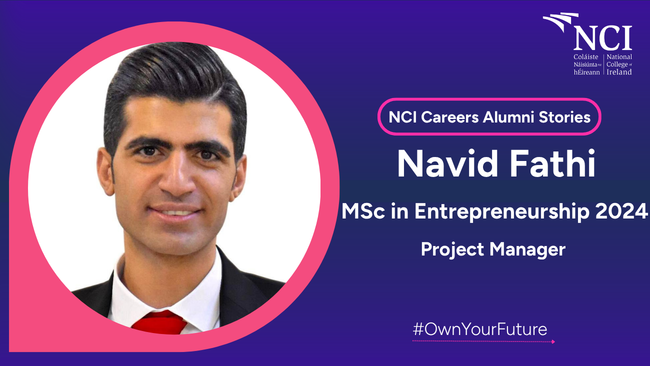
Navid Fathi is a class of 2024 MSc Entrepreneurship graduate from NCI. With a background in project management, entrepreneurship, and innovation, he now works as a Project Manager at University College Dublin, gaining valuable experience in research and strategic development while advancing his career in innovation-driven projects.
Tell us a little bit about yourself and your background?
My name is Navid Fathi, and I have a background in project management, entrepreneurship, and innovation. I completed my Master's degree in Entrepreneurship at National College of Ireland (NCI). Before and during my studies, I was always interested in connecting ideas with execution and creating value through projects and teamwork.
After moving to Ireland, I actively participated in different events, networking opportunities, and entrepreneurial activities while gaining work experience in local businesses. Later, I joined University College Dublin (UCD), where I initially worked in project control and later progressed into a Project Manager role in an ERC-funded research project. Throughout this journey, I have been fortunate to work in multicultural environments and contribute to projects involving research, innovation, and strategic development.
What made you choose Ireland as a place you wanted to work?
Ireland attracted me for several reasons. First, it has a strong international environment and a growing ecosystem for innovation, technology, and entrepreneurship. I also saw Ireland as a place where skills and hard work are valued regardless of your background.
Another reason was the opportunity to study and work simultaneously while building professional connections. I felt that Ireland could provide both career opportunities and personal growth.
What was your most memorable experience from your time at NCI?
One of my most memorable experiences at NCI was the strong support provided by the Career Development team. They regularly organized events where representatives from different companies came to campus to introduce their organizations and opportunities.
There was also a job board within the university where students could explore different openings and opportunities. These activities gave students direct exposure to the Irish job market and helped us understand what employers were looking for.
For me, these experiences were valuable because I learned that university life is not only about classes and assignments — it is also about building connections and discovering opportunities.
How did you hear about your role?
I used a combination of job platforms, networking, and university career activities. During my time at NCI, the Career Department organized various events where company representatives visited the campus and interacted directly with students. Those events helped me understand the market and expand my professional network.
I learned that applying online alone is not always enough. Building relationships and being visible can significantly increase opportunities.
What did the recruitment and selection process involve and how did you prepare for it?
The process involved submitting an application, interviews, and discussing my experience, transferable skills, and how I could contribute to the role.
To prepare, I researched the organization carefully, reviewed the job description, practiced common interview questions, and tried to connect my previous experiences to the role requirements.
I also focused on preparing examples using real situations from my work and academic projects because employers usually want practical examples rather than general answers.
Can you describe the visa process you underwent?
After graduating, I initially moved onto Stamp 1G, which allowed me to stay and work in Ireland after completing my studies.
As my career developed and I moved into professional roles, my visa status evolved accordingly. The process itself required planning and understanding the immigration requirements, but I would encourage students to stay informed because regulations can change over time.
What is a typical day like in your current role?
My role involves coordinating different activities across research and project management functions. A typical day includes meetings with researchers and stakeholders, planning tasks and timelines, monitoring project progress, solving challenges, and ensuring projects stay aligned with objectives.
No two days are exactly the same, which is something I enjoy because it keeps the work dynamic and interesting.
What do you like most about working in your current role or profession?
What I enjoy most is creating structure from complexity and helping ideas move into real outcomes.
I also enjoy working with people from different backgrounds and disciplines. Seeing a project progress from an initial concept into something that creates impact is very rewarding.
What has been the most challenging part of your graduate journey?
The most challenging part of my journey was adapting to a new environment while trying to establish myself professionally.
As an international graduate, you are not only searching for jobs. You are also learning a different culture, understanding the market, building confidence, and creating a professional network from scratch.
Another challenge for me was balancing my entrepreneurial interests with visa limitations. Since starting a business independently is not possible under a graduate visa, I looked for alternative ways to continue pursuing entrepreneurship. I started connecting with Irish professionals who shared similar interests in building a business, and currently we are in the process of registering a startup together.
That experience taught me the importance of being flexible and finding opportunities within constraints.
What are your Top 3 tips for current students and graduates who are looking to enter the job market in Ireland?
Use your university resources as much as possible. Career departments organise valuable events, company visits, and networking opportunities that can help you understand the market and connect with employers.
Build your network early. Attend career fairs, industry events, and connect with people on LinkedIn. Sometimes opportunities come through conversations rather than applications.
Stay proactive and persistent. Career journeys rarely follow a straight line. Continue learning, improving your skills, and adapting your approach.