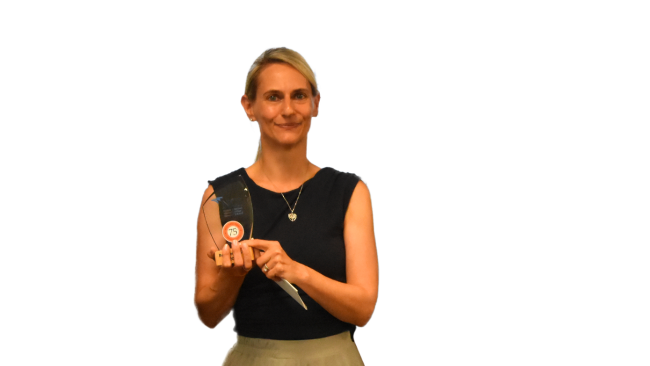
At National College of Ireland, we are proud to share the news that Dr Nicole Gross, Associate Professor in Business & Society and Programme Director for the MSc. in International Business at NCI, has contributed to The Lancet.
Alongside a team of colleagues, Dr Gross' research will be the subject of a three-paper Series in The Lancet on the Digital Determinants of Health.
The Lancet Series: Digital Determinants of Health
The paper series that Dr Nicole Gross is part of was developed in response to this call The Lancet and Financial Times Commission on governing health futures 2030: growing up in a digital world - The Lancet.
Co-authored by thirteen global experts across three papers, with Dr Nicole Gross primarily in paper one, the Series interrogates the way that digital technologies and digital environments are being built currently. With additional input from a Youth Advisory Group comprised of six young adults, the Series also argues that the way digital technologies and digital environments are being governed currently creates legitimate and significant risks to health worldwide alongside the genuine benefits of technology.
This Series will stand alongside other impactful pieces that cover the Social Determinants of Health, Commercial Determinants of Health, Political Determinants of Health and Structural Racism, Xenophobia and Discrimination as Determinants of Health.
Dr Nicole Gross was nominated for a Media Literacy Award in 2025 for her work educating Dublin Community Co-op and community partners on safely and thoughtfully engaging with AI health apps. In June 2026, she won an NCI Research Day award. However, she has been conducting research on the Perils and Promise of AI for over a decade, making the publication of this work in The Lancet Series a source of great pride and academic achievement.
Dr Nicole Gross, Associate Professor in Business & Society and Programme Director for the MSc. in International Business at NCI, shares, "Digitalisation is a mega-trend and there is compelling evidence our health is not just affected but increasingly determined by digital technologies. The evidence is clear, compelling, and mounting: the mental and physical health of children and young adults is negatively affected by digital technologies. The risk of digital harm to children and young adults cannot be understated. I have been researching the intersection between organisation studies, digital technologies, and changing things for the 'greater good' in the context of healthcare for over a decade. Collaborating with a panel of renowned scholars and international experts has been a great honor for me, and The Lancet's impact and reach will help us to get important research findings across."
Unsafe by design? The launch of the Lancet Series on the Digital Determinants of Health
On October 5th, 2026, co-hosted by The Lancet and DTH-Lab, a global webinar launched the new three-paper Lancet Series with Dr Tedros Adhanom Ghebreyesus, Director-General, World Health Organization, giving the welcoming address. Series authors, young people, public health leaders, policymakers, and governance experts came together in an impressive panel to examine why digital environments should be treated as a public health priority and how we can move from responding to harm to preventing it.
This Series is so important, especially in this increasingly digital landscape that we live in, that children are growing up in, and that young adults are earnestly trying to navigate. The significance and the seriousness of this Series can be encapsulated by the idea that if we know that serious harm is possible, we should not wait for it to happen; immense efforts should be made to prevent it.
More about The Lancet
Founded in 1823 by Thomas Wakley, The Lancet, was an international, independent, general medical journal that was published weekly. The aim of The Lancet has always been to make science widely available so that medicine can positively impact people's lives, having a transforming effect on society. Impressively, The Lancet has been addressing key topics for more than two centuries, inspiring conversations, initiating debate, and highlighting urgent topics in society. The journal has worked hard to put science into context, and influence decision makers around the world. Though The Lancet Group has evolved over time, the core belief that medicine must serve society remains. Not only that, but knowledge must transform society, and the best science must lead to better lives.
At National College of Ireland, we would like to congratulate Dr Nicole Gross on her contribution to this Series in The Lancet. The work of this journal has always been to make scientific and medical information accessible to all for the benefit of society, and at NCI, we strive to make education increasingly accessible to all so that people can find their passion, their career path, and thrive, so it is highly rewarding to see the work and passion of a member of staff be part of a historic and significant medical journal.