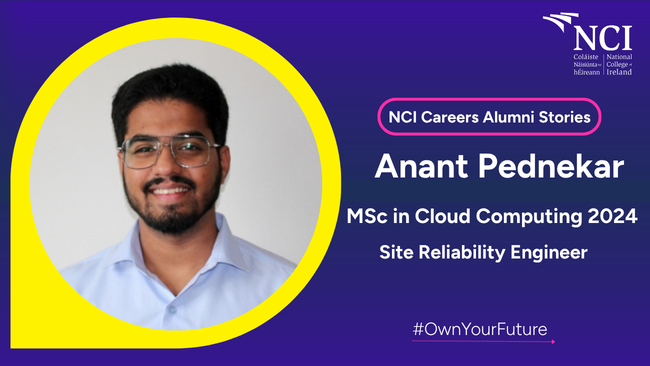
Anant is originally from India, where he completed a Bachelor’s degree in Computer Science before working as a Software Engineer at Persistent Systems. During this time, he worked closely with IBM and Red Hat teams on OpenShift and Kubernetes projects, which sparked his interest in cloud computing. He moved to Ireland in 2023 to pursue a Master’s in Cloud Computing at the National College of Ireland and is now working as a Customer Reliability Engineer at Red Hat, helping enterprise customers resolve complex issues across managed OpenShift platforms.
Tell us a little bit about yourself and your background?
I'm originally from Goa, India, where I completed my Bachelor's degree in Computer Science before working as a Software Engineer at Persistent Systems for around two and a half years. During my time there, I worked closely with IBM and Red Hat teams on OpenShift and Kubernetes projects, which sparked my interest in cloud computing.
That interest eventually brought me to Ireland in 2023 to pursue a Master's in Cloud Computing at the National College of Ireland. Since then, I've been based in Dublin and have continued building my career in cloud engineering.
What made you choose Ireland as a place you wanted to work?
It initially started with choosing the Master's programme at NCI because it aligned perfectly with my career goals. Once I arrived, I realised just how strong Ireland's technology sector is, especially in cloud computing. Many global companies, including Red Hat, have a significant presence here, creating excellent opportunities for engineers.
What was your most memorable experience from your time at NCI?
I really enjoyed being part of a diverse class. Learning alongside students from different countries and backgrounds created a collaborative environment and made the overall experience much more enriching.
How did you hear about your role?
I found the opportunity through LinkedIn and Red Hat's careers page. Because I'd already worked extensively with Red Hat technologies during my time at Persistent Systems, I immediately recognised that it matched the type of role I wanted.
Having previous experience with OpenShift helped me understand both the technical responsibilities and the company culture before I even submitted my application.
What did the recruitment and selection process involve and how did you prepare?
The recruitment process started with an initial recruiter conversation, followed by a discussion with the hiring manager, followed by a technical interview covering Kubernetes, OpenShift, Linux, networking, and cloud fundamentals. The final stage was an interview with the project director.
Can you describe the visa process you underwent?
After graduating from NCI, I received a Stamp 1G Graduate Permission, which allows international graduates to remain and work in Ireland while seeking long-term employment. Once I accepted my offer from Red Hat, I transitioned to a Critical Skills Employment Permit.
What is a typical day like in your current role?
One of the things I enjoy most about my role is that no two days are the same. As a Customer Reliability Engineer at Red Hat, I help enterprise customers resolve complex issues across managed OpenShift platforms while also contributing to the reliability and continuous improvement of the service itself. Part of my role involves ensuring our SLAs and SLOs are maintained and identifying opportunities to improve platform stability and customer experience.
Some days I'm investigating networking issues in Azure, while other days I'm working with Site Reliability Engineering (SRE) teams on infrastructure changes, responding to production incidents, or writing detailed root cause analyses. I also collaborate closely with product engineering teams, sharing patterns and issues I observe in the field so that recurring customer problems can be addressed at the product level rather than just resolved individually.
The role involves working across multiple time zones, collaborating with cross-functional teams, solving challenging technical problems, and continuously learning new technologies, which keeps every day engaging and rewarding.
What do you like most about working in your current role or profession?
The aspect I enjoy most is solving complex technical problems that have a real impact on customers. There's a great sense of satisfaction in resolving a critical production issue for a major organisation.
What has been the most challenging part of your graduate journey?
The biggest challenge was adapting to life in a new country while transitioning from student life into a professional career. During my Master's, I worked part-time at Tesco to support myself financially, which required balancing work, studies, and job applications.
The graduate job search can also be challenging, particularly with visa timelines and building a professional network from scratch. Looking back, those experiences helped me develop resilience, time management, and perseverance, making my career journey even more rewarding.
What are your top three tips for current students and graduates looking to enter the job market in Ireland?
1. Build practical experience.
Don't rely solely on coursework. Create home labs, earn relevant certifications, contribute to open-source projects, and build personal projects. Employers value candidates who can demonstrate practical skills and real-world problem solving.
2. Start networking early.
Connect with professionals on LinkedIn, attend technology meetups, and engage with alumni. Many opportunities come through referrals and professional relationships, so don't hesitate to introduce yourself and ask for advice.
3. Stay patient and keep improving.
Finding the right role can take time, particularly if visa sponsorship is involved. If necessary, take part-time work while continuing to develop your technical skills and apply for opportunities. Persistence, continuous learning, and consistency will eventually pay off.